
Your utility spend runs on autopilot, upward
You are paying for waste you cannot see
Energy is one of your biggest line items and one of the least managed. Finance sees a monthly number, facilities sees equipment to keep running, and nobody owns the question of whether the number is right. In a multi-site operation the problem multiplies, because every location has its own meters, contracts, and quirks, and none of it rolls up into a single view. The result is a large, recurring cost that drifts upward without anyone deciding to let it.
The market around it is not making this easier. Rates are volatile and trending up. ESG reporting now lands on operations and finance, not only on sustainability. Incentives and tax credits exist but expire and shift, and tracking which ones apply across a portfolio is its own job. You are expected to cut the cost, hit the targets, and keep every site running, with a team that already has a full plate.
Most of the money leaks in places a monthly invoice does not show. A contract auto-renews at a stale rate because no one was watching the expiry date. Demand charges spike from power-quality problems that never register as a fault. Billing errors and hidden fees sit unaudited for years. Water runs and leaks go undetected until the bill or the damage arrives.
None of these are dramatic, which is exactly the problem. Each one is small enough to ignore and permanent enough to matter, and together they add up to a number you would not approve if it landed as a single purchase order. The cost of waiting is not a risk you might take on later. It is a cost you are already paying, every billing cycle, until someone goes and finds it.
One vendor cannot fix the whole bill
You have a few ways to handle energy without an independent adviser, and each one covers only part of the picture. A single supplier sells you their product, whether that is the right lever or not. An ESCO pushes the project that pays it best. A solar company sells solar, a lighting company sells lighting, and none of them will tell you that timing your procurement or fixing power quality would have saved more for less capital. Your facilities team knows the buildings but does not have the market access or the hours to benchmark every option across every site.
The gap is that energy savings rarely come from one product. They come from knowing which lever to pull first, which to pull second, and which to skip, across procurement, efficiency, generation, and monitoring. That takes someone who sells none of it directly and can compare all of it honestly. That is the seat we sit in.
One adviser across your entire energy stack
StopTheStress Business is your vendor-neutral energy adviser. We start with an audit of what you pay across every site and every utility, electricity, gas, water, and waste, then map where the savings and the contract exposure actually sit. We rank the options by return, point you to the solutions that save you the most first, and bring in additional suppliers only as the work calls for them. You get a sequenced plan, not a single product pitch.
What keeps this honest is the model. We are compensated by the suppliers you select, not by you, so the audit costs you nothing to begin and the recommendation carries no quota. We are paid on the result lasting, not on a signature, which means our interest is the same as yours, the right lever pulled in the right order. And because we hold no allegiance to any one supplier, we cover the full energy stack rather than the single product a vendor happens to sell.
What we can bring to your energy line:
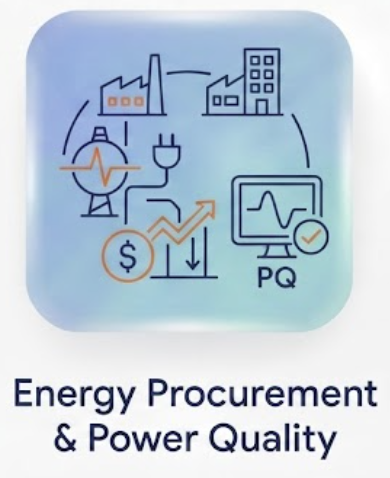
Electricity and natural gas procurement: lock fixed or hedged rates before your contract renews at the market's price, across the 33 states open to energy choice.
Energy expense management and bill auditing: catch billing errors and hidden fees across electricity, gas, water, and waste, and centralize spend you cannot currently see across sites.
Power conditioning: cut wasted electricity and equipment heat to lower demand charges, and it works even in regulated markets where procurement is off the table.
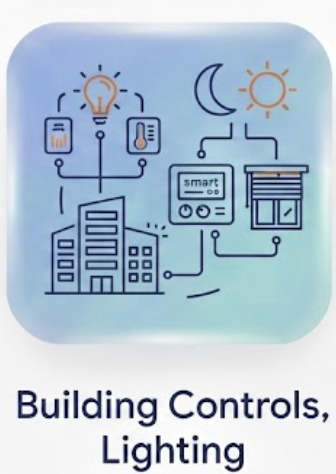
Building controls and monitoring: one dashboard across single or multi-site portfolios, with automated HVAC and lighting and early warning before equipment fails.
LED lighting: cut lighting energy 50 to 70 percent and fold the controls into the same monitoring layer.
HVAC optimization: improve airflow efficiency and lower the energy and maintenance load on existing heating and cooling.
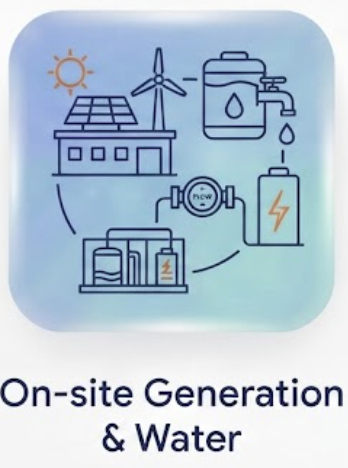
On-site generation and microgrids: solar, battery storage, and backup generators that cut grid dependence and keep critical operations running through an outage.
Water management: smart valves and leak detection that lower water cost and prevent undetected waste across a portfolio.
Reductions you can take to the board
Across engagements, clients typically cut energy spend 20 to 30 percent and remove duplicate or erroneous charges inside 90 days. The savings come from the order of operations, procurement timed to the contract, power quality where demand charges are high, efficiency where equipment is old, and generation where resilience or rate structure justifies it. The number you take upstairs is the total, and it holds because each piece was chosen on return, not on what a vendor wanted to sell.
On specific programs, our suppliers carry deployment data we can walk through line by line. Power-quality installations carry a guaranteed minimum saving with supplier-documented averages in the mid-teens, water programs have cut spend by double digits across multi-site properties, and a senior-living operator restored reliable power with an on-site system after repeated costly outages [CONFIRM all supplier figures before publishing]. Behind the advice is more than 25 years leading national channel programs at Sprint and T-Mobile, the same discipline now pointed at your energy stack. Ask for a reference in your industry and we will bring one to the discovery call.
Frequently Asked Questions
-
How do you make money if the audit is free?
We are paid by the suppliers you ultimately choose, the same way an independent broker is paid by the carrier. You pay nothing to engage us, and our compensation does not change your pricing, because suppliers quote their channel rate whether you come through us or direct. -
Do we have to switch suppliers or rip anything out?
No. The audit often shows that some of what you have is priced fairly and worth keeping. We are looking for the right outcome, not a reason to replace working contracts. -
We are in a regulated energy market. Can you still help?
Yes. Procurement is off the table where there is no energy choice, but power conditioning, efficiency upgrades, on-site generation, water, and bill auditing all still apply and often carry the larger savings anyway. -
How long until we see savings?
Most clients have a clear picture of contract exposure and wasted spend within the first few weeks, and measurable savings inside 90 days. -
What do you need from us to start?
A discovery call and access to a few recent utility bills, ideally from your highest-spend sites. From there we tell you where the savings and the risks are before you commit to anything further. -
Do you only do energy?
Energy is where most clients start. The same model covers AI solutions and communications and network contracts when you are ready, so one relationship can clean up far more than the utility bill.
Contact Information
-
Scott Valentine
President◾StopTheStress Business◾ Consulting◾ Phone (816) 237-0559